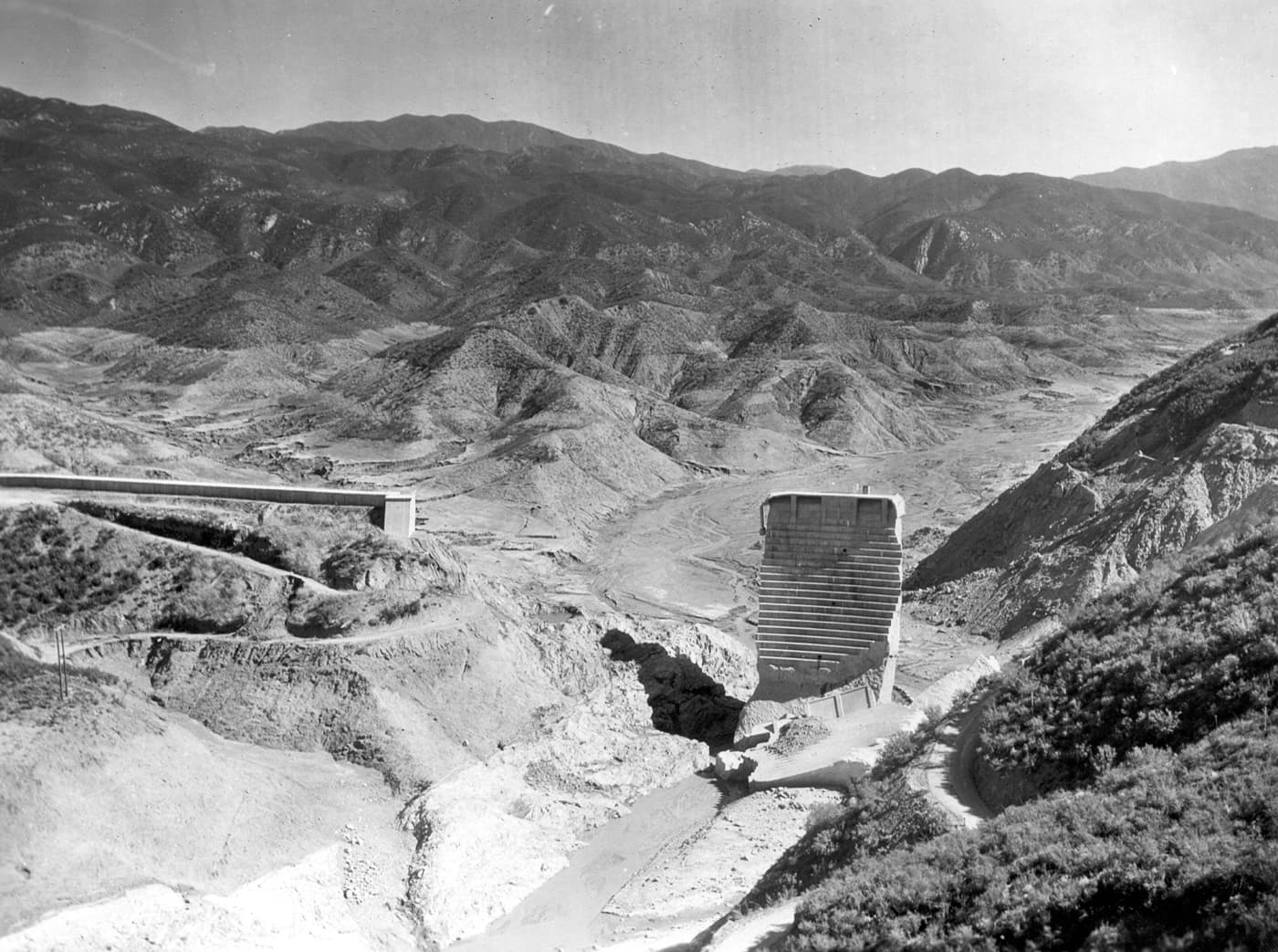
At three minutes before midnight on March 12, 1928, the St. Francis Dam in San Francisquito Canyon let go. A wall of water sixty miles long swept toward the Pacific, taking out Castaic Junction, Fillmore, Bardsdale, and Santa Paula. At least 431 people died. Bodies were still washing up on the beaches near San Diego months later.
The engineering verdict is well documented. The west abutment sat on conglomerate that disintegrated when saturated. The east abutment was built on an ancient landslide that no one knew was there. The dam was raised twenty feet above its design height without widening the base. The water did what water does.
That is the engineering story. It is not the story.
The story is that the man who designed the dam, William Mulholland, was also the man who selected the site, supervised the geological investigation, approved the design, signed off on the construction, inspected for safety, and certified it safe to fill, twelve hours before it failed.
One Signature Is Not a Review.
Mulholland was not stupid. He had built the Los Angeles Aqueduct. He had brought water to a desert. He was, by 1928, the most respected water engineer in the western United States. None of that mattered. The reason it didn't matter is the lesson.
When one person becomes the sole technical authority on a project, two things happen that nothing in the engineering can fix. First, the disagreements that would have surfaced in a real review never get formed, because no one is paid or positioned to form them. Second, the few warnings that do surface are filtered through that same person, who has every personal incentive to discount them. Mulholland was told, by his own workers, that the west abutment leaked dirty water on the morning of March 12. He looked at it, said it was clean, and drove back to Los Angeles. He was not lying. He believed himself.
That is the hardest thing for our profession to absorb. The failure was not dishonesty. It was the absence of any voice in the room with both the standing and the independence to say I disagree, and my disagreement counts.
Why the Profession Wrote a Law About It.
The coroner's jury did something unusual after St. Francis. It did not just assign blame; it issued a finding that read like a piece of engineering philosophy: "The construction and operation of a great dam should never be left to the sole judgment of one man, no matter how eminent, without check by independent expert authority."
That sentence is the founding sentence of dam safety in the United States. The California legislature passed a registration act in 1929. The Federal Power Commission began requiring independent reviews. The Boards of Consultants you see on every major dam project today, the formal third-party panels who answer to the regulator, not the owner, exist because of those words on that coroner's report.
We did not learn that engineering review is important. The engineers already knew that. We learned that consolidated authority defeats review, no matter how much engineering is happening below it.
The Modern Version Looks Different.
I want to be careful here, because the obvious lesson, don't put one engineer in charge of everything, is the easy one, and the easy one is no longer the relevant one. We have boards of consultants now. We have independent reviews. We have peer review at every gate.
The modern version of the St. Francis failure is subtler. It is the project where a Board of Consultants exists on paper but reports to the owner's project manager. It is the firm where the technical lead and the project manager are the same person, because the schedule got compressed. It is the inspection where the engineer signing the report is the same engineer who designed the modification being inspected. It is the regulator who relies on the owner's consultant's analysis because the regulator's staff was cut by a third.
Each of those is, structurally, a Mulholland. The form is different. The substance, one chain of judgment with no independent voice that can stop it, is the same.
Three Questions for This Friday.
For owners: on your most important dam, name the person whose job it is to disagree with your chief engineer. If you cannot, you have a structural problem that no individual's competence will fix.
For engineers: on the project that worries you most, can you identify a person, not a document, a person, whose review of your work is independent of your firm's billing relationship with the owner? If not, you are the review.
For regulators: when you accept an owner's consultant's report, what process do you have for asking the question Mulholland could not ask himself: is this person institutionally able to deliver bad news?
The Good News.
Here is the good news, because this is DamNews. The lesson of St. Francis is not that engineers cannot be trusted. It is that engineering judgment, like every other kind of human judgment, performs better when it is checked by another mind that owes nothing to the first. That is not a limitation of engineering. It is a property of being human.
We can build that into our projects. We do, in the best cases. The reason every major dam in the country today has a Board of Consultants, an independent forensic review process, and a regulator with the authority to stop a fill, those are not bureaucratic burdens. They are the institutional memory of San Francisquito Canyon, written into our standards by people who could not redesign the dam after the fact but could redesign the system that built it.
The engineer who designs a dam needs a second engineer who is paid, structurally, to tell him he is wrong. When that voice exists, dams hold. When it does not exist, no level of individual brilliance, and Mulholland's was real, is enough.
That structural truth is the most durable safety system we have. It costs almost nothing to install on any project. And it has, in every case where it was missing, been the thing that was missing.