I want to begin this piece with the sentence that every engineer reading it should not be able to shake for the rest of the week.
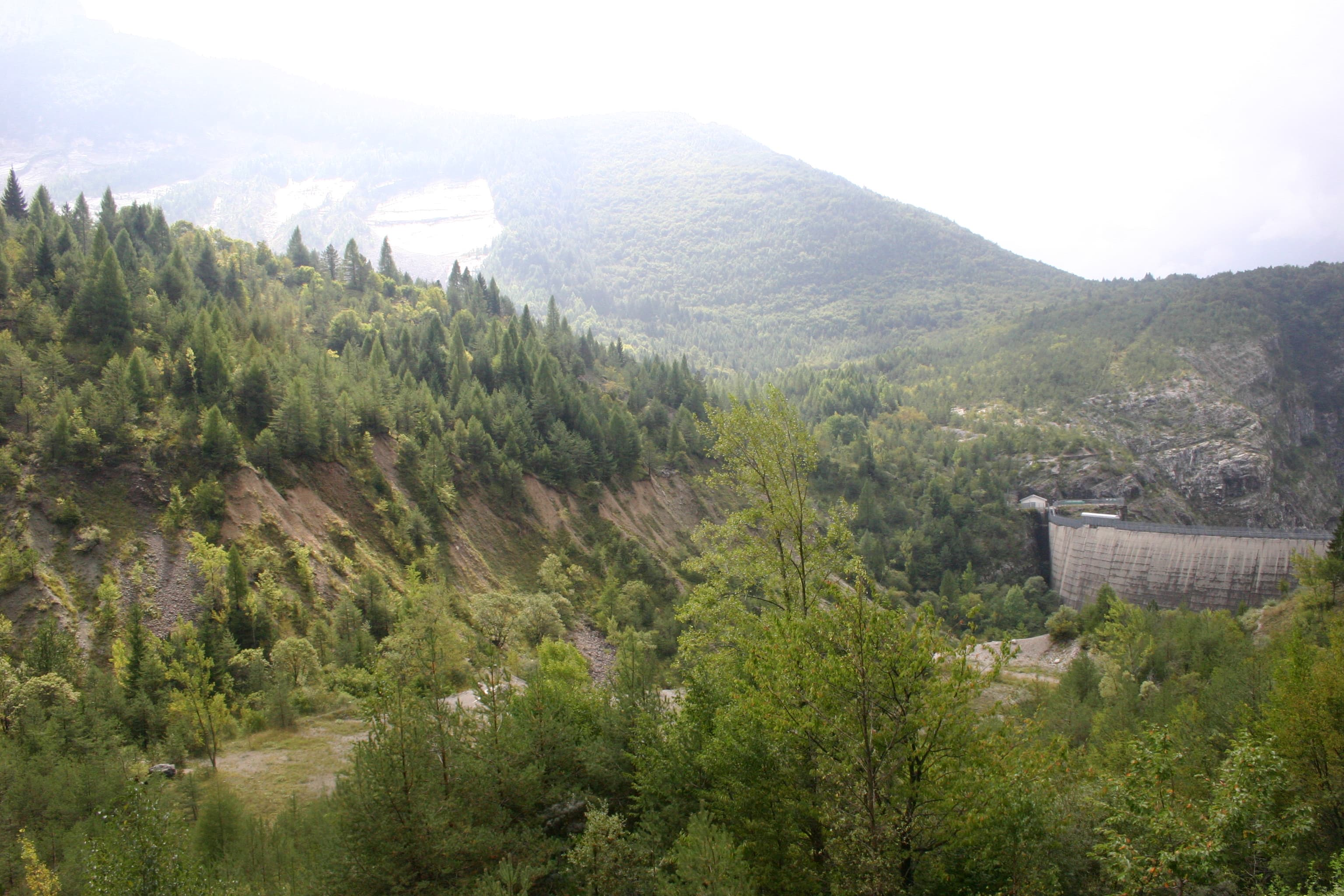
The Vajont Dam, in the Italian Alps, did not fail.
On October 9, 1963, at 10:39 in the evening, a slab of Monte Toc roughly the size of a small mountain, two hundred and seventy million cubic meters of rock, slid into the reservoir behind the dam at more than a hundred kilometers an hour. The water displaced by the slide rose over the crest of the dam in a wave two hundred and fifty meters tall, swept down the valley, and erased the town of Longarone in about four minutes. Roughly two thousand people died.
The dam itself was barely damaged. It is still standing today. You can walk to it. The structure performed exactly as its engineers had designed it to perform, under loading conditions no dam engineer in 1963 had ever been asked to design for.
I want to be very precise about this, because it is the entire reason Vajont belongs in this series. Vajont is not a story about an engineering failure. It is a story about an organizational failure that happened to involve a dam. The dam did its job. The people who decided to keep filling the reservoir did not do theirs.
The Engineers Saw The Slide Coming.
I am going to give you the timeline, because it is more damning than any commentary I could write.
In 1959, before the dam was complete, an engineer named Edoardo Semenza, son of the dam's chief designer, surveyed Monte Toc and produced an internal report describing the entire south slope as a paleolandslide, geologically active, with the potential to fail catastrophically into the future reservoir.
In 1960, with the reservoir at less than half capacity, the south flank of Monte Toc began to creep. A two-kilometer crack opened in the shape of an M along the slope. A smaller landslide deposited eight hundred thousand cubic meters into the reservoir. Field instrumentation, installed in response, showed movement accelerating with each rise of the reservoir.
By 1963, three years into measured, continuous, observed movement of the mountain, the people running the project knew what was coming. We know they knew, because there are letters. There are internal memos. There are reports from the engineers on site to the corporate office in Venice, in writing, stating in plain language that the slope could fail catastrophically and the resulting wave could overtop the dam.
The reservoir was not lowered. The town of Longarone was not warned. The fill continued, on a schedule, because the dam needed to be operational, because the corporation that owned it was about to be nationalized, because lowering the reservoir would have looked like an admission, because the men in the office in Venice did not believe the men in the field, because the engineering of the dam itself was so good that the political and economic momentum of the project had become detached from the question the engineers in the field were actually asking, which was will the mountain hold.
The mountain did not hold.
The Most Important Sentence In Dam Safety.
I have been thinking, all week, about how to put what Vajont teaches us into a single sentence. Here is the best I can do.
An organization that ignores its own engineers does not need a dam to fail in order to kill people.
Read that again. It is the whole of it.
The Vajont dam is, to this day, structurally intact. If you looked at it on satellite imagery you would say that is a successful dam. You would be wrong, because the success of a dam is not a property of the structure. It is a property of the system that operates the structure, and that system includes the engineers in the field, the executives in the office, the regulators reviewing the operations, and the communities downstream. When one of those four elements stops functioning, the structural performance of the dam becomes irrelevant. The water finds another way to do what water does.
This is the lesson the dam safety profession has, in my opinion, never fully internalized. We are very good at the structure. We are competent at the geology. We are improving at the hydrology. We have built whole certifications around the operations. The thing we are still not good at, sixty-three years after Longarone, is the field-to-decision pathway, the organizational route by which observed-and-reported field conditions reach a person empowered to halt the fill. If that pathway is broken, nothing else about the dam matters.
Here is what experience says about that pathway. It is almost never broken at the field engineer. The field engineer almost always sees it, almost always says it, almost always writes it down. It is broken between the third and the seventh person it routes through, in the layer of middle management whose job is to contextualize what the field says. Each of them softens the language slightly, in good faith, in the service of being a responsible filter. By the time it reaches the decision maker, the original signal is unrecognizable. This is not anybody's fault, and that is the most dangerous thing about it.
Three Questions.
For owners: walk through, in your head, exactly what would happen if an engineer at your most important dam called you tomorrow and said I think we should lower the reservoir twenty feet immediately. Who do they reach? How many people does the call route through before someone authorizes the action? How many of those people have a personal incentive to ask the engineer to wait until the next regular meeting? If your honest answer to that last question is more than zero, you have a Vajont problem regardless of how new your dam is.
For engineers: in the last year of inspections, did you record an observation that you privately thought was more serious than the report category you assigned it? Most of us have. The question is whether your organization makes it survivable to write what you actually believe.
For regulators: when the operator of a dam pushes back against a recommendation to reduce reservoir level, do you have a process, not a policy, a process, with named individuals and time limits, for resolving the disagreement before the next rainfall event? If the resolution mechanism is "the operator gets to keep filling while we discuss it," you are the Venice office.
The Good News.
Here is the good news, because this is DamNews. The thing that killed Longarone was, of all the failure modes in this series, the most reversible. It does not require redesigning a dam. It does not require new construction technology. It does not require an act of Congress. It requires only that an organization, in advance, decides what it will do when its own engineers tell it that something is wrong, and that the decision is we will listen.
You can write that policy in an afternoon. You can name the person who has the authority to lower a reservoir, in writing, by the end of the week. You can stress-test the pathway by running a tabletop where the most junior engineer on the project gives a serious adverse finding, and watching what happens to that finding as it moves up the chain. The places where it slows down, gets softened, gets requalified, gets routed to committee, those are your Vajont points. Every one of them is fixable. This is the most cost-effective dam safety work the profession does, and almost no one budgets for it.
The Vajont Dam holds back its reservoir to this day. It is a working dam. It is also, in the most literal sense possible, a memorial to a different kind of failure, the failure that happens when an organization keeps its structure and loses its engineers.
We are not, in 2026, immune to that. No country is. No firm is. No regulator is. The mountain is moving, somewhere, on someone's project, this week. The question is not whether the engineers in the field can see it. They can. The question is whether the office in Venice will pick up the phone.